

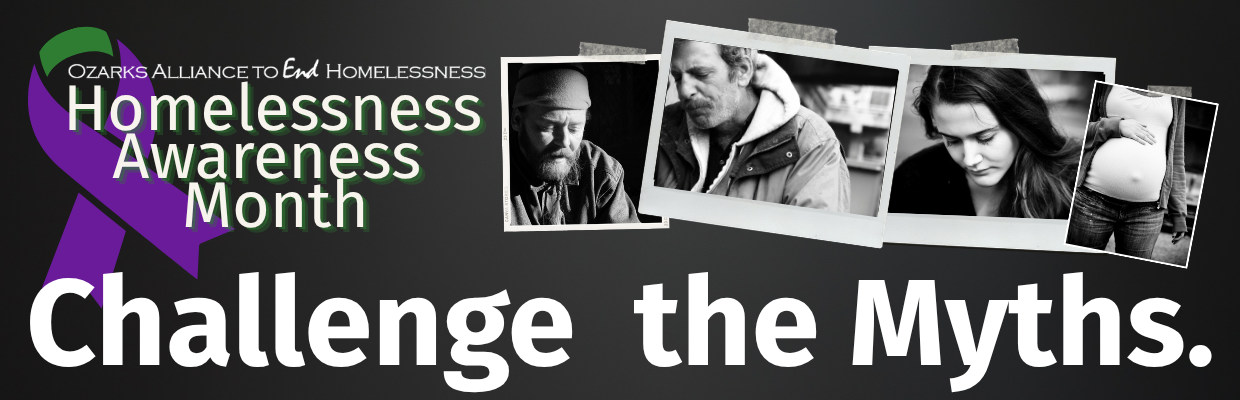
Homelessness rarely has a single cause. Housing costs, income loss, health conditions, trauma, family disruption, discrimination, and gaps between public systems can overlap until a housing crisis becomes homelessness. Explore reliable research and proven programs that reveal the circumstances behind homelessness—and the responses that help people regain stability.
Myth:
Homelessness is mainly the result of poor personal choices.
Evidence: Personal crises matter, but housing availability, rent burden, income, health, discrimination, and system failures shape who loses housing and how quickly they can recover. Missouri has only 37 affordable and available rental homes for every 100 extremely low-income renter households.
Myth:
A single-night count captures everyone experiencing homelessness.
Evidence: The Point-in-Time count is a valuable snapshot, but GAO found that it likely underestimates homelessness because locating people in shelters, vehicles, doubled-up situations, and unsheltered settings is inherently difficult.
Myth:
Veterans experiencing homelessness simply need to use their benefits.
Evidence: Effective responses combine affordable housing with outreach, case management, health care, legal assistance, and help navigating benefits. HUD-VASH and SSVF are designed around those combined needs.
Myth:
Youth homelessness always begins with running away.
Evidence: Youth pathways include family instability, foster-care exits, educational disruption, poverty, rejection, and unsafe relationships. National research also finds elevated risks among LGBTQ youth and youth without a high-school credential.
Myth:
Families need only temporary shelter to find housing stability.
Evidence: HUD’s randomized Family Options Study found that priority access to long-term housing subsidies produced substantial improvements in housing stability and family well-being.
Shared Foundations

The 2024 Annual Homelessness Assessment Report, Part 1
Publisher: U.S. Department of Housing and Urban Development
Type: Federal data report
Depth: Deeper read
Myth challenged: “Everyone experiencing homelessness is visible in one count.”
HUD’s central national source for Point-in-Time and housing-inventory estimates, with breakouts for families, youth, Veterans, and chronic homelessness. Use it to establish definitions and scale, while pairing it with the GAO resource below to explain the limits of a one-night count.
 Homelessness: Better HUD Oversight of Data Collection Could Improve Estimates
 Homelessness: Better HUD Oversight of Data Collection Could Improve Estimates
Publisher: U.S. Government Accountability Office
Type: Federal evaluation
Depth: Deeper read
Myth challenged: “The official count is a complete census.”
An accessible examination of how communities count homelessness and why Point-in-Time data can understate the population. The report also analyzes factors associated with changes in homelessness, making it useful for teaching readers to interpret local and national statistics.
The Gap: Missouri
Publisher: National Low Income Housing Coalition
Type: State data website and report
Depth: Quick overview
Myth challenged: “People could find housing if they tried harder.”
A clear Missouri-specific picture of the shortage of rental housing affordable to extremely low-income households. The interactive state page connects housing supply and rent burden to instability and helps readers see why homelessness cannot be understood only through individual behavior.
Effects of Housing First Approaches on Health and Well-Being
Authors: Baxter, Tweed, Katikireddi, and Thomson
Type: Peer-reviewed systematic review and meta-analysis
Depth: Technical
Myth challenged: “People must resolve every other problem before receiving housing.”
A synthesis of randomized trials examining Housing First. It finds strong evidence for improved housing stability and no evidence that Housing First increases problematic substance use, while noting that short-term health effects are less consistent.
All In: The Federal Strategic Plan to Prevent and End Homelessness
Publisher: U.S. Interagency Council on Homelessness
Type: Comprehensive policy framework
Depth: Deeper read
Myth challenged: “Shelter alone can end homelessness.”
A broad framework connecting homelessness to housing, health, income, equity, public systems, and prevention. Its six pillars—equity, data, collaboration, housing and supports, homelessness response, and prevention—provide a useful organizing model for OAEH’s educational content.
Veterans
VA Research on Homelessness
Publisher: U.S. Department of Veterans Affairs, Office of Research and Development
Type: Comprehensive research website
Depth: Quick overview
Myth challenged: “Veteran homelessness has one simple cause.”
An accessible entry point to VA research on health, trauma, substance use, outreach, primary care, and housing stability among Veterans. It also explains the role of the National Center on Homelessness Among Veterans in translating research into policy and practice.
Prevalence of Eviction, Home Foreclosure and Homelessness Among Low-Income U.S. Veterans
Authors: Jack Tsai and Dina Hooshyar, VA National Center on Homelessness Among Veterans
Type: Research brief
Depth: Deeper read
Myth challenged: “Benefits alone protect every Veteran from housing loss.”
A nationally representative study of low-income Veterans examining the overlap among eviction, foreclosure, and homelessness. It is especially useful for showing that housing loss is linked to economic and housing-system pressures, not simply military service or behavioral health.
An Analysis of Returns to Homelessness Among Veterans
Authors: Thomas Byrne and Jack Tsai, VA National Center on Homelessness Among Veterans
Type: Technical research report
Depth: Technical
Myth challenged: “Once housed, every risk disappears.”
Uses administrative data on nearly 294,000 exits from VA homeless programs to examine returns after placement in permanent housing. The report helps readers understand that housing placement is essential, while sustained stability may also require health care, income, and ongoing supports.
Geriatric Conditions in a Population-Based Sample of Older Homeless Adults
Authors: Brown and colleagues
Type: Peer-reviewed study
Depth: Technical
Myth challenged: “People in their fifties are too young to need aging-related support.”
A population-based study of functional impairment, falls, cognition, vision, and other geriatric conditions among older adults experiencing homelessness. It documents substantial needs at comparatively young ages and supports age-adapted shelter, health, and housing services.
Supportive Services for Veteran Families
Publisher: U.S. Department of Veterans Affairs
Type: Federal prevention and rapid-rehousing program
Depth: Quick overview
Myth challenged: “Help begins only after a Veteran enters shelter.”
Describes a flexible, Veteran-centered program that combines homelessness prevention, rapid rehousing, case management, benefits navigation, and temporary financial assistance. It demonstrates how timely support can prevent an imminent crisis from becoming prolonged homelessness.
Older Adults
Toward Dignity: Understanding Older Adult Homelessness
Publisher: UCSF Benioff Homelessness and Housing Initiative
Type: University research report
Depth: Deeper read
Myth challenged: “Older adults have always been homeless or chose the situation.”
Examines who experiences homelessness later in life, pathways into homelessness, health and functional needs, and barriers to regaining housing. Although California-based, its large representative study offers a rigorous picture of mechanisms that communities should investigate locally.
The Emerging Crisis of Aged Homelessness
Authors: Culhane and colleagues
Type: Multi-site research and policy report
Depth: Technical
Myth challenged: “Older-adult homelessness is a small, static problem.”
Uses shelter records and forecasting in Boston, New York City, and Los Angeles County to examine the aging of the homelessness population, expected service needs, and the potential for housing solutions to offset shelter, hospital, and nursing-home costs.
Geriatric Conditions in a Population-Based Sample of Older Homeless Adults
Authors: Brown and colleagues
Type: Peer-reviewed study
Depth: Technical
Myth challenged: “People in their fifties are too young to need aging-related support.”
A population-based study of functional impairment, falls, cognition, vision, and other geriatric conditions among older adults experiencing homelessness. It documents substantial needs at comparatively young ages and supports age-adapted shelter, health, and housing services.
Homelessness: Actions to Help Better Address Older Adults’ Housing and Health Needs
Publisher: U.S. Government Accountability Office
Type: Federal evaluation
Depth: Deeper read
Myth challenged: “Older-adult homelessness belongs to only one service system.”
Reviews the intertwined housing, health, and supportive-service needs of older adults experiencing homelessness and evaluates the federal response. It is a strong bridge between research findings and the policy coordination required to meet complex needs.
+New Day
Publisher: Community Partnership of the Ozarks
Type: Local program
Depth: Quick overview
Myth challenged: “A meal or a bed is the only support someone needs.”
A local example of low-barrier, dignity-centered support. New Day combines basic services with coordinated assessment and connections to health care, benefits, legal services, education, and housing resources—illustrating why stabilization often requires several systems to work together.
Youth
Missed Opportunities: Youth Homelessness in America
Publisher: Chapin Hall at the University of Chicago, Voices of Youth Count
Type: National research overview
Depth: Quick overview
Myth challenged: “Youth homelessness means only sleeping outside.”
A concise, accessible overview of national survey findings that include couch surfing as well as shelter and street homelessness. It highlights elevated risks associated with poverty, interrupted education, parenting, race, and LGBTQ identity.
Missed Opportunities: Pathways from Foster Care to Youth Homelessness
Publisher: Chapin Hall at the University of Chicago, Voices of Youth Count
Type: Research-to-impact brief
Depth: Deeper read
Myth challenged: “Young people become homeless only because they ran away.”
Focuses on young people who experience homelessness after foster care. It examines child-welfare histories and transition points, helping readers understand how exits from public systems can produce housing instability when relationships, income, and practical supports are insufficient.
Missed Opportunities: LGBTQ Youth Homelessness in America
Publisher: Chapin Hall at the University of Chicago, Voices of Youth Count
Type: Research-to-impact brief
Depth: Deeper read
Myth challenged: “LGBTQ youth homelessness follows one predictable storyline.”
Examines the disproportionate risk and added harms experienced by LGBTQ youth. Importantly, it complicates the familiar “coming out” narrative by describing family instability and frayed relationships that may develop over time.
Missed Opportunities: Education Among Youth Experiencing Homelessness
Publisher: Chapin Hall at the University of Chicago, Voices of Youth Count
Type: Research-to-impact brief
Depth: Deeper read
Myth challenged: “Housing instability is separate from educational success.”
Explores the two-way relationship between educational disruption and homelessness. It offers practical recommendations for earlier school identification, cross-system collaboration, and support for students moving between schools or entering higher education.
McKinney-Vento General Q&A
Publisher: SchoolHouse Connection
Type: Accessible legal and practice guide
Depth: Quick overview
Myth challenged: “Students must have shelter paperwork or a permanent address to attend school.”
A practical guide to the educational protections available to children and youth experiencing homelessness. It explains identification, enrollment, school stability, and authorized supports in plain language while citing the relevant provisions of federal law.
Families
Family Options Study: 3-Year Impacts
Publisher: U.S. Department of Housing and Urban Development
Type: Randomized controlled policy study
Depth: Technical
Myth challenged: “Services without lasting housing affordability are sufficient for most families.”
HUD’s landmark multi-site experiment compared long-term housing subsidies, rapid rehousing, transitional housing, and usual care for families in shelter. Long-term subsidies produced substantial gains in housing stability and several measures of adult and child well-being.
Family Options Study: Short-Term Impacts
Publisher: U.S. Department of Housing and Urban Development
Type: Federal research report
Depth: Technical
Myth challenged: “All family homelessness programs produce the same results.”
The earlier phase of the Family Options Study explains its rigorous design and compares four common interventions for 2,282 families across 12 communities. Read it alongside the three-year findings to understand how outcomes developed over time.
Ending Homelessness Before It Starts
Publisher: U.S. Interagency Council on Homelessness
Type: Homelessness prevention framework
Depth: Deeper read
Myth challenged: “Communities can act only after a family loses housing.”
An actionable framework for preventing homelessness through collaboration among housing, health, education, child welfare, justice, and other systems. It emphasizes that communities must both rehouse people and reduce the number entering homelessness.
One Door
Publisher: Community Partnership of the Ozarks
Type: Local coordinated-entry program
Depth: Quick overview
Myth challenged: “Families in crisis should have to navigate every agency on their own.”
OAEH’s local coordinated entry point for people experiencing or at immediate risk of homelessness in Greene, Christian, and Webster counties. Families with children are directed to the O’Reilly Center for Hope for assessment and referrals to housing and shelter resources.
The Kitchen, Inc. Emergency Shelter and Community Housing
Publisher: The Kitchen, Inc.
Type: Local program model
Depth: Quick overview
Myth challenged: “A meal or a bed is the only support someone needs.”
A local example of low-barrier, dignity-centered support. New Day combines basic services with coordinated assessment and connections to health care, benefits, legal services, education, and housing resources—illustrating why stabilization often requires several systems to work together.