What the Ozarks Can Learn from Efforts to End Veteran Homelessness
6 November 2026
Veteran Homelessness Is Not Inevitable
1 November 2026
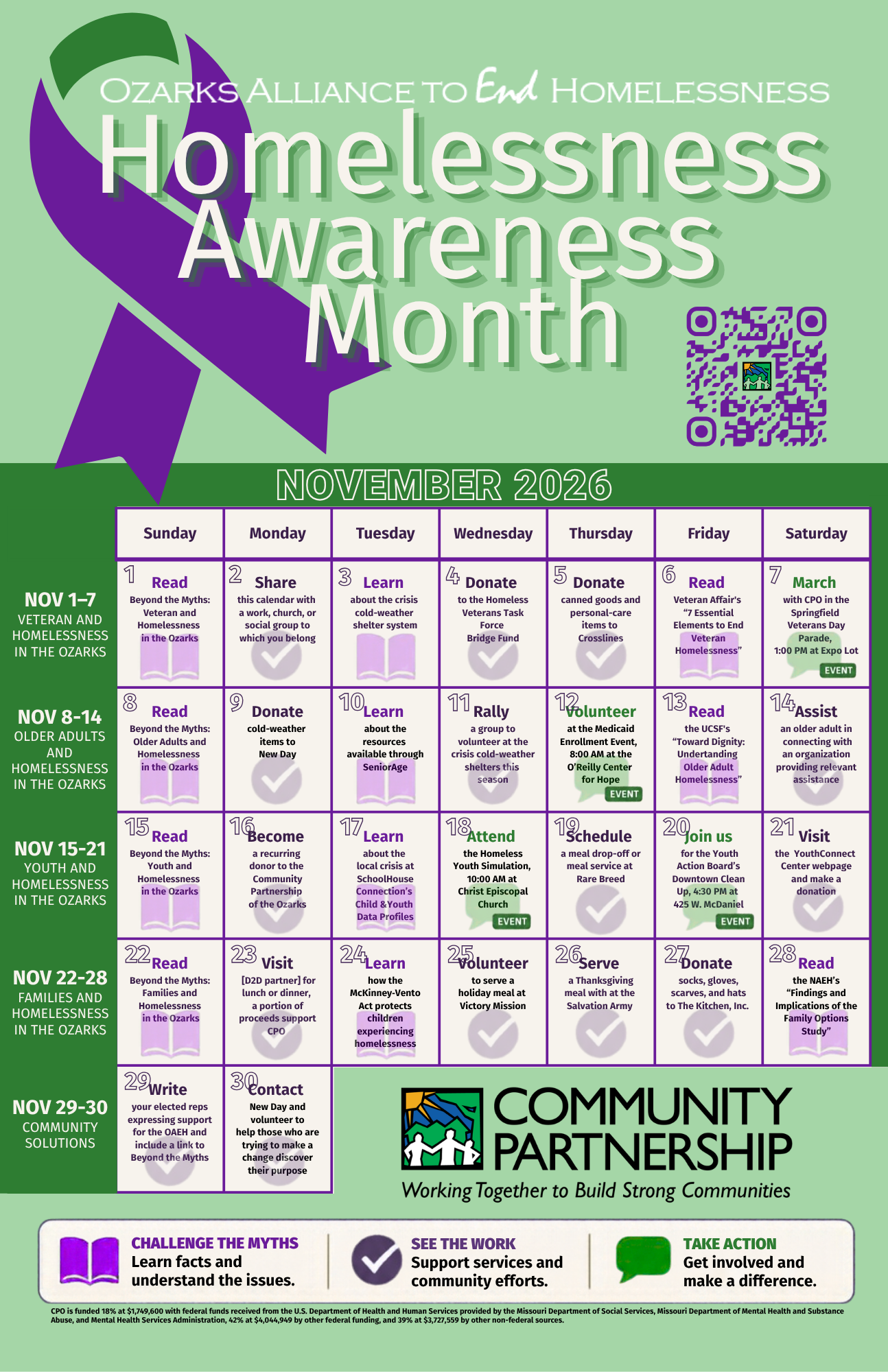
During Homelessness Awareness Month, the Ozarks Alliance to End Homelessness is inviting Southwest Missouri residents to look beyond familiar assumptions about homelessness. This week's focus on veterans presents an opportunity to recognize both the service of veterans and the fact that no one who served our country should be left without a safe place to call home.
When people hear “veteran homelessness,” they may picture someone sleeping outside and assume the problem is mainly about personal failure, untreated trauma, or an unwillingness to accept help. Those assumptions are incomplete—and they make solutions harder to see.
Veterans experiencing homelessness in the region are our neighbors. In the January 2026 Point-in-Time Count, 27 veterans were experiencing homelessness in the three-county region. That number matters, but it is only a one-night snapshot. It does not fully capture veterans temporarily staying with family or friends, living in motels, sleeping in vehicles, or living one financial emergency away from losing housing.
During Homelessness Awareness Month, it is worth questioning the assumption that veterans experiencing homelessness simply need to “ask for help.” Indeed, significant strides have been made in addressing housing instability among veterans, and many programs offer vital assistance, but the availability of resources does not always translate into timely access to a safe, affordable home. Many veterans do reach out but are too often frustrated by process the condition assistance on preserving documents, maintaining a working phone, attending appointments, navigating eligibility rules, securing transportation, finding a landlord willing to rent, and paying deposits or utility costs—all while living through a housing crisis.
A second assumption about homelessness among veterans that needs to be unpacked is that it is primarily caused only by military service or post-traumatic stress. After a twenty-year war, it is likely that the nation is only beginning to realize the elevated vulnerability that veterans of the Iraq and Afghanistan conflict harbor. This vulnerability may yet manifest itself in an increase of veterans who find themselves at risk of becoming unhoused. Inasmuch as trauma, disability, mental-health conditions, and substance-use disorders can be important factors for some veterans experiencing homelessness, quality treatment must continue to be made available. But homelessness is also a housing problem. A veteran with a job, disability income, or benefits can still be priced out of the rental market, lose housing after a medical emergency, or struggle to find a unit that meets program requirements.
The local response is stronger when agencies work together. OAEH’s Homeless Veteran Task Force brings partners together to identify veterans who are homeless or unstably housed and connect them to housing, health care, benefits, employment, and support services. The task force’s Bridge Housing Fund helps close the gap between homelessness and housing by providing short-term assistance to veterans enrolled in eligible housing programs who lack a safe, decent place to stay while awaiting placement. The Kitchen, Inc.’s Home at Last program provides housing-related assistance for eligible veterans and their families. VA programs, including HUD-VASH and Supportive Services for Veteran Families, also help prevent and resolve homelessness.
These services matter, but they are not a pancea. A rental subsidy cannot be used if no landlord will accept it. Case management cannot create an apartment that does not exist. A veteran cannot leave shelter for permanent housing if available units are unaffordable, inaccessible, or unsuitable for the household’s needs.
As we focus on the homelessness among our nation's veteran population, readers can take practical action:
Share accurate information. If a veteran is homeless or at immediate risk, encourage them to contact the National Call Center for Homeless Veterans at 877-4AID-VET (877-424-3838) or connect with the Gene Taylor Veterans' Outpatient Clinic.
Support landlord participation. Property owners can consider working with veterans using rental assistance and evaluate applicants individually rather than relying on broad exclusions.
Give flexible support. Donations to local providers can help cover application fees, utility deposits, identification, transportation, work clothing, or a phone.
Hire and mentor veterans. Stable work, predictable schedules, and supportive supervision help people maintain housing.
Reject stigma. Do not assume someone experiencing homelessness is unwilling to work or beyond help.
Advocate for affordable homes. Veteran-specific services work best when there are safe, accessible homes that people with fixed or modest incomes can afford.
Homelessness Awareness Month should move the community beyond symbolic gratitude. Veterans deserve more than thanks; they deserve a local system in which a housing crisis is brief, services are reachable, and permanent housing is genuinely available.
For an in-depth examination of veteran homelesseness in our community, read "Beyond the Myths: Veterans and Homelessness in the Ozarks."